Nutritional transparency in healthy vending: What it means and how The Jar delivers it

August 2026
Traditionally, vending has often required consumers to make a purchase with very little information beyond what they can see through the machine glass or on the front of the product packaging. However, modern vending technology has changed that.
At The Jar Healthy Vending, we're proud that our machines feature interactive screens that allow consumers to view nutritional information, allergens, and dietary features before making a purchasae. This gives people greater visibility over what they are buying and supports more informed (and in many cases healthier) choices. We're also proud that our product selection features the widest range of healthy snacks, drinks, and meals, plus popular classic products.
This is particularly relevant across London today as consumers are becoming more and more conscious of nutrition features, allergies and dietary requirements and as workplaces and venues increasingly look for food and drink solutions that support wider health and wellbeing goals.
One framework helping to drive this change is the WELL Building Standard. This article will explore the WELL Building Standard and show how The Jar Healthy Vending is leading the way in supporting specific buildings across London promote healthy living.
The WELL Building Standards
Launched in 2014 and administered by the International WELL Building Institute (IWBI), the WELL Building Standard is an evidence-based framework designed to improve health and wellbeing through the buildings and spaces in which people live and work.
WELL v2 considers ten areas: Air, Water, Nourishment, Light, Movement, Thermal Comfort, Sound, Materials, Mind and Community. By February 2024, WELL strategies were being used across more than five billion square feet in 130 countries, supporting an estimated 25 million people across almost 74,000 locations (IWBI, 2024)! There are an estimated 1000 WELL Certified buildings across London.
Where a building is pursuing relevant WELL Nourishment category, the food and drink available on site, including vending provision, may form part of the assessment for certification. This means vending operators may need to adapt both their product range and the information made available to consumers on their machines that are placed in these sites.
WELL and The Jar Healthy Vending
At The Jar Healthy Vending, we understand the WELL Nourishment category and we can easily cater for clients whose buildings are WELL Certified. This specific category supports healthy and sustainable eating patterns by setting requirements for food provision, giving consumers access to optimal, healthy products.
The standard encourages its buildings and organisations to make healthier food choices more accessible. This can include providing a a wider range of nutritious options, reducing the promotion of less healthy foods and giving people clearer information to help them make informed decisions. Ultimately, the aim is to create environments that support healthier eating habits and overall wellbeing.
The WELL Building Standard sets a number of requirements around the food and drinks available within a building:
Sugar in drinks: No individual beverage can contain more than 30g of sugar per container. In vending machines and food service menus, at least 50% of drinks must contain 15g of sugar or less per 240ml serving.
Sugar in food: No individually sold, single-serving food item can contain more than 30g of sugar.
Whole grains: Where grain flour is the main ingredient in a product, whole grain must be the primary grain ingredient.
Allergen labelling: All foods, drinks, snacks and meals must clearly identify the eight major food allergens, as well as gluten, in line with relevant national regulations. This applies to both packaged and prepared foods.
Artificial ingredients: Products must be clearly labelled if they contain certain artificial ingredients or additives, including artificial colours, flavours and sweeteners, sulphites, MSG, BHA, BHT, sodium nitrate/nitrite, hydrolysed vegetable protein and other specified additives.
Overall, the standards aim to reduce the availability of high-sugar products while making nutritional, allergen and ingredient information clearer for consumers.
Nutritional transparency
For us, this is one of the most important developments in modern vending. The WELL Building Standard recognises that access to clear nutritional information can help consumers make more informed dietary choices. This includes information such as calories, macronutrient content, ingredients and allergens.
In traditional vending, much of this information may only be visible on the back of the packaging, meaning the consumer cannot easily view it before making a purchase. Our machines help to overcome this by using interactive screens, allowing consumers to select a product and view key nutritional and ingredient information before they buy.
Our telemetry system also allows our operations and office team to manage this information remotely. New products, dietary information and nutritional data can be added and updated without needing to visit the machine in person, helping us keep product information accurate and accessible.
Consumers can also use the machine’s search function to find products that suit particular dietary requirements, including vegetarian, vegan, gluten-free and halal options where available.
Modern healthy vending is not simply about removing certain products. It is about giving consumers greater choice, greater transparency and the information they need to make their own decisions.
So, what does this look like in practice? Let’s take a look at a few real life examples.
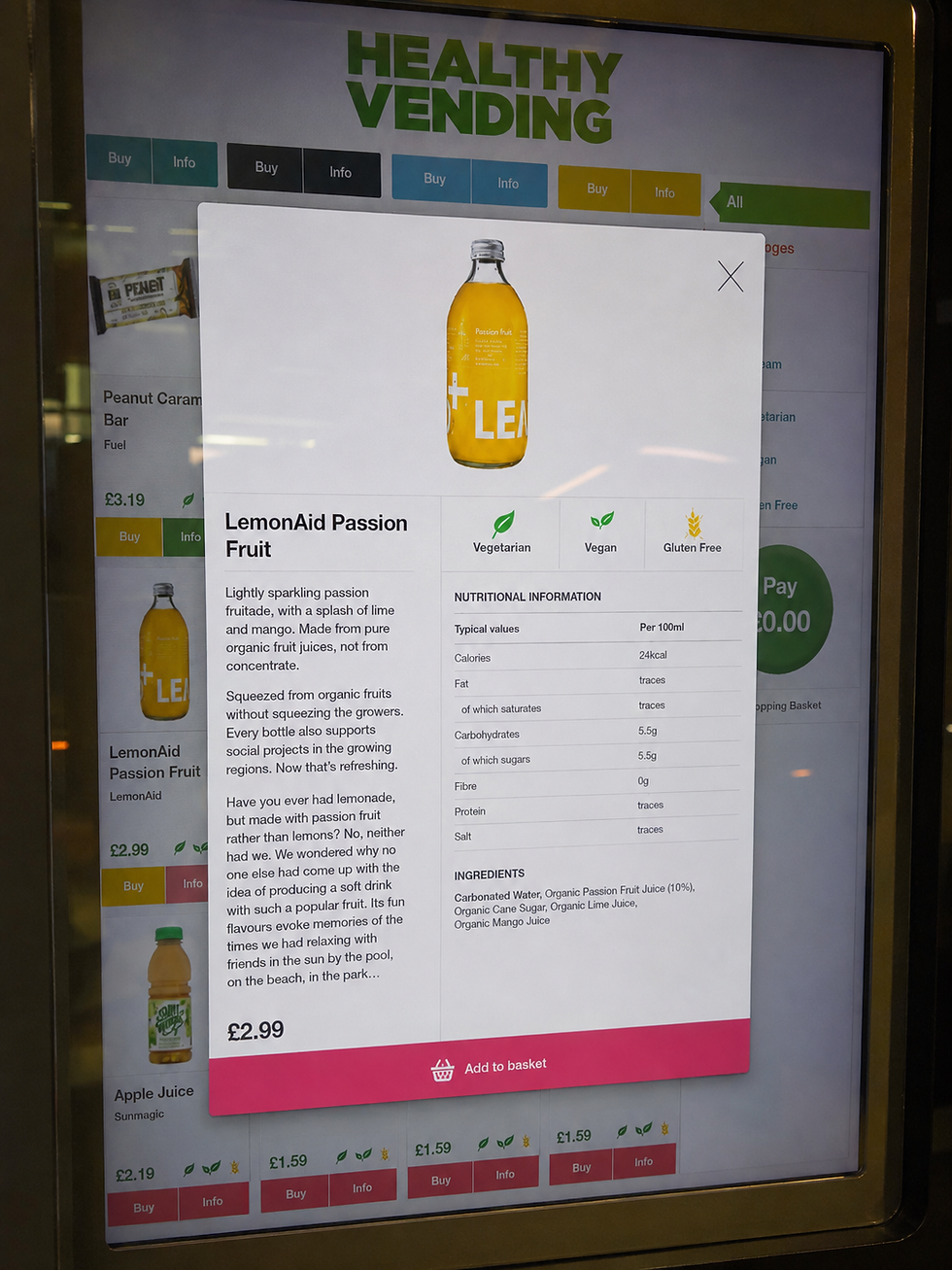
Consumers can browse and read detailed information for every single one of our products.

Beyond the product
The WELL Building Standard reflects a wider change in how organisations think about health and wellbeing within shared spaces. Food and drink provision is no longer just about what is available; it is also about how easily people can understand what they are buying.
For The Jar Healthy Vending, this means thinking beyond the products inside the machine. Nutritional information, allergens, dietary requirements and product visibility all form part of the consumer experience. Our experience supporting these buildings has reinforced something we strongly believe: healthy vending should not simply mean restricting choice. It should mean offering a considered product range and giving consumers the information they need to make the choice that is right for them. The future of healthy vending is not only about what sits inside the machine, but what the consumer knows before they press buy.
Is your building looking for this kind of vending service? Reach out to our friendly team today and we’ll be happy to talk you through our machines, product options and how we can support your site.